


-

- DISCOVER SIKHISM
- SIKH GURUS
- Sikh Gurus
- Sri Guru Nanak Sahib Ji
- Sri Guru Angad Sahib Ji
- Sri Guru Amar Das Sahib Ji
- Sri Guru Ram Das Sahib Ji
- Sri Guru Arjan Sahib Ji
- Sri Guru Hargobind Sahib Ji
- Sri Guru Har Rai Sahib Ji
- Sri Guru Harkrishan Sahib Ji
- Sri Guru Tegh Bahadur Sahib Ji
- Sri Guru Gobind Singh Sahib Ji
- Sri Guru Granth Sahib Ji
- GURDWARAS
- SIKH LIBRARY
- DAILY HUKAMNAMA
- MORE
- KIRTAN
- LIVE TV
- ABOUT US

1984 Delhi Genocide - Impunity
|
|
|
|
|
|
|
|
Role of the Police
Senior police officers:
• Ordered their subordinates to ignore attacks against Sikhs;
• Ordered policemen to disarm Sikhs to increase their vulnerability to attack;
• Systematically disabled and neutralized any officers who attempted to deviate from the norm of police inaction and instigation;
• Released culprits; and
• Manipulated police records in order to destroy any paper trail of the violence and protect criminals from the possibility of effective future prosecutions.
At all times, if they so desired, the police and their superiors had sufficient force and knowledge to effectively counter the violence. Below, we explore these issues by discussing police inaction, police instigation of violence, police manipulation of records, and their knowledge and potential to counter the massacres. We also highlight similar abuses committed by the Railway Protection Force and Fire Brigade.
Police Structure
In 1984, there were 73 police stations (PS) in Delhi, each with a Station House Officer (SHO) and, in order of descending hierarchy, Sub-Inspectors (SI), Assistant Sub-Inspectors (ASI), Head Constables (HC), and Constables. Each station had a wireless arrangement to the central control room in police headquarters.
The 73 police stations were grouped into six police districts (East, West, North, South, Central, New Delhi), with each police district managed by a Deputy Commissioner of Police (DCP). Each DCP had the aid of several Assistant Commissioners of Police (ACP).
The North, East and Central districts were further grouped into Delhi Range, managed by Additional Commissioner of Police H.C. Jatav. The South, West, and New Delhi districts were in New Delhi Range, managed by Additional Commissioner of Police Gautam Kaul. Subhash Tandon served as the most senior officer, the Commissioner of Police (CP), with ultimate responsibility lying in the Lieutenant Governor of Delhi (Lt. Gov.). The Lt. Gov. was P.C. Gavai until November 4 when he was replaced by M.M.K. Wali. The President of India appoints the Lt. Gov.

Police Inaction
At best, police officers did not respond to calls for help and passively observed the violence inflicted on Sikhs,287 stating they did not have instructions to save Sikhs. A senior police officer, for example, admitted that the police merely watched while a gang of assailants set the house of Swaran Singh, 200 yards from the police station, on fire.
At least nine Sikhs were burned alive in the ensuing fire. While patrolling that area, the police remained completely passive – they made no arrests and never opened fire. They registered FIR No. 482 /84 when one member of the mob, Rajnish, was injured after Swaran Singh acted in self-defense. FIR No. 485 /84 mentions the attack on Swaran Singh's house, but does not mention the killing of his family.
Neither the relief numbers broadcast on television nor the emergency numbers worked. When the police did receive calls for help, because victims personally approached them after risking exposure in the streets or called them at the station, officers responded with: "We have no instructions to help or save Sikhs." The policemen of PS Ganwarganj in Kanpur went further – Inspector Sengal specifically stated that the City Magistrate had instructed them to give the assailants liberty and not to interfere in the looting and burning.
Even senior officers offered no protection to Sikhs when present during mob attacks. When Indian Express reporter Monish Sanjay Suri went to Gurdwara Rakab Ganj around 4 p.m. on November 1, he saw Additional Commissioner of Police Gautum Kaul standing on one side as Congress (I) leader Kamal Nath controlled a mob of 4000 people. When the group charged the gurdwara gate where Kaul stood, Kaul merely stepped to the side. The gang burned several Sikhs alive during the attack.
The police also insulted those requesting help, exposing their communal hatred toward Sikhs. On the evening of October 31, Jaya Jaitley and her husband Ashok Jaitley, then an officer of the Indian Administrative Services, drove around the capital to observe the violence. When they asked an officer to intervene and stop a mob from stoning cars, the policeman dismissed the request, stating: "They are only out after the Sardars."
While 15 to 20 armed policemen leisurely sat in the police station, one Sub Inspector told Nihal Singh, from Sector IX B in Bokaro Steel City, who had come for help: "You bastards are the progeny of Bhindrawale. You Sikhs are worse than Muslims." When the General Secretary of a gurdwara in Naraina Industrial Area called the police for help in protecting the burning gurdwara, the police responded: "Isn't what's happening the right thing? Wait, you'll be burned, too."
The police failed to enforce the curfew. Lalita Ramdas, the Nagrik Ekta Manch activist, described how she spent 18 hours outside on November 2, all in violation of the curfew order. The police did not stop or question her once. As Rahul Kuldip Bedi described in his affidavit above, the police's failure to take action extended even to the brutality of leaving a half-dead Sikh man in their parking lot, instead of procuring medical care for him.
Police Instigation of Violence Against Sikhs
The police performed functions vital to the assailant's ability to attack and kill Sikhs. The most important, beside their active participation and promises of impunity, was their role in disarming Sikhs of their kirpans, breaking up Sikh defence groups, and sending Sikhs to their individual houses, defenceless. As Gurbachan Singh's affidavit demonstrates, Sikhs often could hold off assailants by defending themselves collectively with their kirpans. In Mangolpuri, when Sikhs resisted the mob, it retreated and went to the local Congress (I) office.
The local Congress (I) leader rushed to the police station to complain about the armed Sikhs. The police then came to Mangolpuri, arrested those Sikhs, disarmed them, and sent them back to their houses. The mob then slaughtered each of them. In Palam Colony, the Sikhs resisted the mob when it attacked them on November 1 and the mob ran away. Two hours later, a local police van came and disarmed the Sikhs of their kirpans. One hour later, the assailants returned and, refreshed by the police participation, began a looting and killing spree against the defenceless Sikhs.
Police officers forced Sikhs to return to their houses by reassuring them of their protection or threatening to kill them. After reassuring the residents of Guru Nanak Nagar in Bokaro Steel City of their protection, the police went towards the section of the colony where the poor dairy-men lived. Five to ten minutes after their jeep went there, a gang of assailants came from that side and, aware that the Sikhs were now isolated, attacked them.
If Sikhs used their licensed firearms in self defence or refused to surrender their kirpans, the police often arrested them, beat them, and filed false charges against them. Senior police officers instructed their subordinates to arrest Sikhs acting in self defence. Harbans Singh was the Sub Inspector of Yamuna Puri police station. When he entered the wireless room, he noticed that all messages relaying that Sikhs were defending themselves were accompanied by directions to the police to take action against the Sikhs. For example, he heard the message: "Sikhs carrying kirpans are moving in Anand Nagar area." The instructions came: "Send force to arrest them immediately." No instructions accompanied messages stating that gangs of assailants were killing Sikhs.
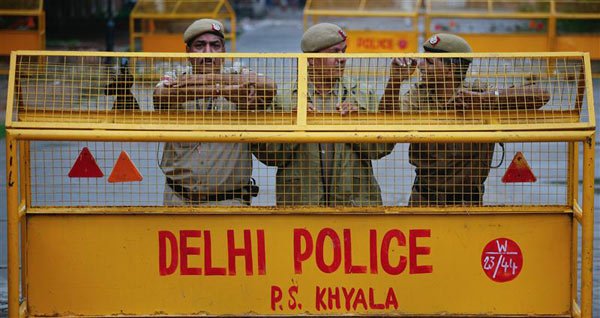
Avtar S. Diwan's experiences demonstrate the pattern of arrest, torture, and implication in a false case. Diwan lived with 18 other family members in a two-story house. His father, Faqir Singh, had defended India in two wars, the Indo-China and Kargil wars. On November 1, the mob first attacked their colony in Paharganj. On November 3, his father called the military which rescued them and took the whole family to PSPaharganj where they stayed until November 5.
On November 5, the policemen told them it was safe to return. That evening, assailants collected in front of their house. After Faqir Singh called the police, SHO Dev Raj and some constables arrived, but they disappeared during the subsequent attack by the mob. Faqir Singh fired in the air in self-defence with his licensed weapon to scare away the mob. When the military arrived, he stopped, and everyone heard firing continuing outside the house.
Expecting the military to rescue them, the family was surprised when the military and police lined them up on the road and began to beat Narinder Singh, one of their relatives. Late at night, the police took the entire family to PS Paharganj and locked everyone, including the six month- and 18 month-old babies, in the cell. The police beat Faqir Singh. The next day, on November 6, at 3:30 p.m., the police took them to Tis Hazari Courts, sent the three minor children to a children's home, placed Avtar Singh, his father, and his two brothers in solitary confinement in Tihar Jail, and placed the remainder of the family in judicial custody in Tihar. They remained there for a week.
The police registered a false case against them, claiming they had fired indiscriminately into the crowd and had killed an Army solider. The police claimed to have recovered four firearms and an air gun, which were actually licensed weapons the family had deposited during their first trip to the police station. Narinder Singh later died from his police beating, and Avtar Singh's uncle Amir Singh also died at the hands of the mob.
On November 12, Additional Sessions Judge K.B. Andley granted bail to Avtar Singh and his family because he found they had prima facie been attacked by a mob and fired because they apprehended danger to their lives. On April 30, 1985, a report from the Central Forensic and Scientific Library exonerated them, stating that the bullets recovered from the deceased Army soldier did not match their firearms. However, not until December 8, 1988, more than four years after the massacres, did the prosecution drop the case, resulting in their acquittal. Ironically, the two police officers who had arrested them and beatNarinder Singh – Amod Kanth, then Additional Commissioner of Police, and S. S. Menon, then SHO Paharganj – received Presidential medals and promotions.
The actions of the most senior officer, Commissioner of Police Subhash Tandon, reflect this policy of disarming Sikhs. When Tandon arrived at Rakab Ganj Gurudwara, where Kaul had earlier allowed the mob to attack by stepping aside, the mob had already burned alive two Sikhs. Tandon did not touch a single member of the mob or try to ascertain responsibility for the burning deaths of the two Sikhs. Instead, Tandon chose to arrest a Sikh who possessed a licensed firearm.
Similarly, on November 1, Tandon arrested two Sikhs who fired in self defense from inside Motia Khan gurudwara, located in central Delhi. Tandon charged them with attempted murder although none of the assailants suffered any injuries. Again, he acted as if blind to the mob of assailants before him. The mob subsequently burned down the gurudwara.
Beyond disarming Sikhs and lodging false cases against them, police officers actively instigated and participated in the looting and killing, also making promises of impunity. ASI Rattan Lal Sinha witnessed the mob's attacks on the house of Narinder Pal Singh of Bhowra Colliery. Promising to save the family, he put them inside their store room and locked the door from outside. The rioters then prepared the house for demolition with oxygen dynamite, targeting the store room.
In total disregard for his promises to the Sikh family, ASI Ratan Lal Sinha reassured the mob: "When the management is with us, what could anyone do." The mob exploded the dynamite, burying the family. Through the gaps in the wall, the attackers persisted and hounded the trapped family, killing Narinder Pal's father, injuring his mother, and also injuring Narinder Pal with five bullets.
Similarly, in the case of Gurudwara Rakab Ganj, when the mob began to disperse when Sikhs defended themselves and repulsed the initial attacks on the gurudwara, the policemen shouted: "Salas [Bastards] – this is the time that you have got to do whatever you want. Why are you running off?" The policemen reassured the assailants of ample opportunity to attack: "We will return in ten hours."
Santokh Singh described how a mob of 5000 to 6000 people, led by prominent Congress (I) leader Panna Lal Pradhan, attacked the Sikhs in Hari Nagar Ashram, New Delhi on the morning of November 1. The DCP, SHO Ishwar Singh, Ved Prakash, Head Constable Mohinder Singh and 50 other constables reached the scene. Using loudspeakers, they instructed the mob to kill every Sikh and burn their properties. The senior officers then instructed the policemen to participate.
When the curfew order was announced at 6:45 pm the police declared they would not enforce it against non-Sikhs. They also repeated the rumor regarding dead Hindu bodies arriving in trains from Punjab and fired rounds at the Sikhs, although no one was hit. The military eventually rescued Santokh Singh and his family.
Police supplemented these verbal promises of impunity and directions to kill with direct participation in the killings. Three jeeps of policemen fired on Sohan Singh and his family, as Sohan Singh attempted to resist the attacking mob. When the assailants attacked Chinti Devi's house in Bokaro Steel City on the morning of November 1, a uniformed and armed police officer accompanied the assailants.
The police officer fired four rounds at her elder son when he tried to defend himself with his kirpan against the mob as it chased him. The son fell, hit by the police officer's bullets. The mob then used his kirpan to chop off his head. The mob also killed her husband and dumped their bodies in fields, where they were traced six days later.
In another case, policemen also shot Ajit S. Sawhney, of Kingsway Camp, in his back, although ACP D.L. Kashyap did take him to the hospital. When Bhoop Singh Tyagi, Youth Congress (I) President of the area – who attended a meeting led by MP and Minister H.K.L. Bhagat on October 31, led assailants in an attack on Shakarpur's Sikh residents, four police officials from PS Shakarpur joined him. This gang, including the police, killed Harbhajan Singh's father, brother, and a neighbor who was sheltering with them.
Ravinder Singh told the Nanavati Commission that then SHO J.C. Sharma and other policemen lathi-charged Sikhs in Tilak Nagar on November 2. Then, "without any reason…[they] entered our houses, dragged us out and starting beating us." He discussed how the police took the Sikh men to Tilak Nagar police station, tied their hands, and beat them again. The police broke the arm of one of Ravinder Singh's brothers, and beat the other brother Tarminder Singh with an iron chain. After the beatings, the police filed false charges against the Sikh men and they were sent to Tihar Jail. Ravinder Singh and the other men were released on bail two weeks later.
Manipulation of Records and Investigations
Police officers systematically and thoroughly manipulated or destroyed the potential opportunities for gathering evidence of the perpetrators and crimes. The police refused to record or manipulated information regarding attacks against Sikhs; performed casual investigations, if at all, precluding effective future prosecutions; and falsified their records to cover up the carnage and their lawless activities.
Well aware of the future need to hide the criminality of their actions, the police records provide us with little information on the role of police officers and government officials in the carnage, as well as of the spectrum and extent of crimes perpetrated against Sikhs during the massacres.
Section 154 of the Indian Code of Criminal Procedure (CCrP) mandates that police officers record all information about a cognizable offence, given orally or in writing, and obtain the signature of the person providing the information. This section mandates that police officers record FIRs, or First Information Reports.
The failure to register these reports undermines the prosecution of cases. Although FIRs are not considered to be substantive evidence, they are used to corroborate or contradict the complainant, as warranted by Sections 157 or 145 of the Evidence Act. They also form the basis for further investigation. The police carefully recorded FIRs for murders of non-Sikhs during the massacres.
For Sikh victims, the police:
• Refused to record FIRs;
• Recorded omnibus FIRs;
• Refused to list certain names in the FIRs given by victims as the perpetrators of the violence;
• Filed FIRs under reduced charges; and
• Generally falsified FIRs.
Numerous deponents from areas such as Kiran Gardens, Sarai Rohilla, Hari Nagar Ashram, and Shastri Nagar, for example, stated that the police would not record their reports. When Gurcharan Singh, the granthi of Gurudwara Singh Sabha in Sarai Rohilla went to the police station to describe how the Railway Protection Force had shot and killed five to six Sikhs on November 1 in order to aid the attacking mob, the police officer refused to record his FIR, stating "such things happened with numerous other Sikhs also."
Baljit Singh of Gandhi Nagar, Kanpur was told by the officer who refused to register his FIR that he should be happy that he had survived. Sham Singh was detained for five days for insisting on filing an FIR; he was released only when he signed a report written by the police that he did not read.
Senior officers specifically instructed the SHOs of police stations to record a fixed number of FIRs, rather than one FIR for each crime that occurred. The ACP Gandhi Nagar, R.D. Malhotra, told the SHOs of Gandhi Nagar, Kalyanpuri, and Shakarpur to register one, three and three cases, respectively, according to directions issued by the DCP East, Sewa Dass.
Similarly, according to DCP Special Branch Bhim Singh, ACP Shahdara ordered the three SHOs of Shahdara subdivision to register only one case per day. Following a similar pattern, PSAdarsh Nagar registered only one FIR per day. S.M. Bhaskar, then SHO of Krishna Nagar, told the Nanavati Commission that he received instructions from the DCP to only register one FIR per locality.
Amrik Singh Bhullar, who was posted as SHO Patel Nagar during the massacres, told the Nanavati Commission that higher police officers directed him to file all 115 complaints received by him as one FIR No. 556: "A decision to treat all such cases in one case was taken at a meeting which was held by the higher officers where I was also present. The discussion…had taken place in the Office of the ACP Patel Nagar…I was told by ACP that this decision to treat those cases as one case was in consultation with DCP (Central). " The next day, when his cross-examination continued, Bhullar tried to retract his statement and place the responsibility of the decision to file one FIR on himself.
In response to interrogatories from the Misra Commission, the Delhi Administration stated that the police filed a total of 228 FIRs in massacres where 2733 deaths are officially acknowledged in Delhi, not including other crimes, such as rape, assault, property destruction, and robbery.
Instead of lodging individual FIRs for each crime, as police procedure requires, the police lodged omnibus FIRs of a vague nature, precluding meaningful investigations and prosecutions, as well as destroying crucial evidence. FIR No. 511 of PS Punjabi Bagh, filed on the morning of November 1 by SHO R.C. Singh, states:
[D]ue to the brutal assassination of the Prime Minister of India Shrimati Indira Gandhi and due to strong resentment in the people of Delhi, Capital of India, the Public after having illegally associated, indulged in arson looting and general massacre. And there are reports of firing from various gurdwaras and houses of Sikhs which have resulted in the loss of many lives.
Such reports have come for East and West Punjabi Bagh, Raj Nagar, Anand Bagh, Sri Nagar (or Tri Nagar) Shakur Basti and from the circumstances it appears that offence under Section 302, 307, 395, 397, 427, 436, and 25/27, 54/59 Arms Act has been committed.
It is further stated that gas squad was also sent.
Not only did this FIR give absolutely no details of any crimes that had occurred, making future investigations impossible, the same language was replicated in FIR No. 351 /84 of PS Nangloi and FIR No. 174 /84 of PS Mangolpuri. Also, this FIR absurdly associated the extensive loss of life with firing from Sikh houses and gurudwaras, not the massacres committed by the mobs.
Instead of sending the FIRs immediately to the Metropolitan Magistrate as required by law, the police sent them a week later, suggesting that they actually wrote the FIRs later to cover up their actions. In Sultanpuri police station, the police allegedly lodged FIR Nos. 250 and 251 on November 1. These FIRs also match the language of the FIR from Punjabi Bagh quoted above. The police did not send these FIRs to the Metropolitan Magistrate until November 9.
The police protected political leaders and police by refusing to record FIRs or the names of culprits if the complainant identified other police officers or Congress (I) party leaders and workers as the perpetrators. When Sardool Singh went to lodge his report with PS Shahdara on November 12, he named 11 people from the mob. Sub Inspector Tulsi Das called some of those 11 people to the police station and, in their presence, forced Sardool Singh to sign that he had nothing against them. Harvinder Singh of Kanpur went to the police station to record an FIR that would have implicated a Congress official's son and B.B. Yadav, the police officer in charge of the Fazal Ganj police post.
To his dismay, the very same officer was there and refused to record an FIR that would implicate himself. Instead, Yadav threatened Harvinder Singh to leave the police station or get shot. When Sardul Singh Kalsy of Bokaro Industrial Area went to lodge an FIR against Congress (I) leaders Ram Nath Singh, Dr. P.C. Mishra, and Shukla, the police omitted their names and wrote the FIR in Hindi, which Kalsy could not read and, thus, could not verify.
In addition to the abuses above, the police edited or completely falsified the FIRs. When Devinder Kaur of Sector III/W, Bokaro Steel City, went to the police station to lodge her FIR, she stated that a Central Industrial Security Force (CISF) party had rescued her family. The police interchanged "CISF" for "police" despite Devinder Kaur's insisting otherwise. The police often used pre- formatted FIRs that did not have columns for the names of perpetrators or the deceased, as well as any facts of the relevant incidents.
Police also filed reduced charges, refusing to file complaints of murder. In their testimony before the Nanavati Commission, witnesses Harvinder Singh and Bodh Raj declared that the FIR filed by the police on their behalf stated false information. On November 2, 1984, the police had recorded that they arrived at the scene of arson, arrested 44 people, and opened fire to disperse the mob. Singh and Raj, however, declared that no police came until evening, by which time the mob had burned 16 to 17 shops, including that of Bodh Raj.
Making a farce of the proper procedures regarding investigation, which involve conducting identification parades, drawing site maps, and recording statements of witnesses, the police carried out casual and perfunctory investigations, if at all. According to Senior Advocate Harvinder Singh Phoolka, the police closed 300 out of 700 cases as untraced, meaning that they did not conduct any investigation but merely stated they could not locate the culprits.
For those that they did investigate, the police only interviewed the complainant, summarized the complainant's statements and entire experiences during the massacres into vague three to four sentence descriptions, deleted the key perpetrators, failed to correlate related events in order to pinpoint common culprits, or failed to ask the complainants if they had witnessed other crimes. They purposefully told culprits to deposit stolen property on the roadside so that they were not linked to the property, destroying crucial evidence.
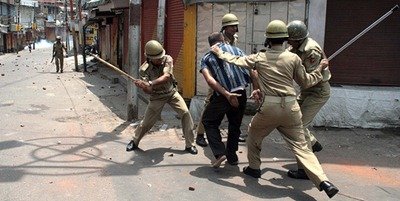
In State v. Ram Pal Saroj, for example, Additional Sessions Judge S.N. Dhingra wrote:
Police had not made any other person as witness in this case. In fact, there is no investigation done by the police except recording the statements. Statements recorded by the police are also very sketchy and some times the statements are actually not made by the victims but they have been recorded by the police officials sitting in police station and it is alleged that these statements were made by victims. In most of the cases it is found that in order to help the accused persons police has given wrong facts in the statements. The victims of the riot cases when appeared in the court had given altogether a different story.
In State v. Ved Prakash, etc., Dhingra went to the extent of refusing to use contradictions between the victim statements allegedly recorded by the police and those made by the witnesses in court to discredit the victim, declining to make truth and justice "casualty to the vicious nexus between the police and accused persons."
Demonstrating this "vicious nexus," senior officers like Additional Commissioner of Police (Delhi Range) H.C. Jatav ordered the police to protect the culprits by quickly releasing them from their custody. Jaimal Singh from Model Town, New Delhi described how he and others caught some looters on October 31 and handed them over to Jatav after explaining what had happened. Jatav immediately released them from his custody. Monish Sanjay Suri, who was an Indian Express reporter in 1984, gave a detailed account of the police's release of culprits after Congress (I) leaders intervened with the support of Jatav:
1. I went to the Karol Bagh police station on the morning of November 5 on hearing that the police had recovered a lot of property looted during the days of rioting and that many persons had been arrested.
2. I heard a lot of shouting going on inside the SHO's office. I went to the door of the office. I saw the Additional Commissioner of Police, Delhi Range, Mr Hukam Chand Jatav, sitting in the SHO's chair. With him was the Central District, DCP, Mr Amod Kanth. On the other side of the table, among a group of people shouting, I saw Assistant Commissioner of Police, Mr Murti Sharma and the SHO, Mr Ranbir Singh.
3. Seeing me, Mr Jatav angrily ordered a junior police officer present by the side of the door to take me away from there. I had to leave the room, but the shouting was so loud that I could hear everything a few paces away. But then I went round the side and positioned myself near the window through which I could see what was going on in the room, and also hear what was being said.
4. Among the group of people who had come to the office were Mr Dharam Dass Shastri, then MP, and Mr Moti Lal Bakolia, Congress-I leader. Both Bakolia and Shastri were shouting in protest against the arrests made by the police. But it was an odd situation. The Congress-I leaders were shouting against Mr Kanth, the DCP, and his senior, Mr Jatav was clearly expressing sympathy with the position of the leaders, in a clear rejection of the work done by his own DCP, Mr Kanth.
5. At one point Mr Kanth accused the leaders of trying to shield criminals. At this there was loud frenzied shouting on all sides. I saw Mr Bakoliya get up and reach out at the SHO, as if to assault him. Some others got up and calmed him down. Mr Shastri was fully backing what Bakoliya was doing. Neither Mr Jatav nor Mr Kanth did anything about the rough treatment that the local leaders were trying to give out.
6. In a while Mr Ram Murti Sharma came out of the office. He said to me that whenever the police try to do any work, the politicians stop them. Obviously disgusted, he pointed to what was going on inside.
7. The shouting continued for a while and then the meeting ended. I do not know what was decided. Outside I met Mr Jatav. I asked him why as a senior officer he had not been firm in preventing some politicians from misbehaving with his SHO. He said nothing of the sort had happened. I said I had seen it. His reply was that no, you have not seen it.
Suri's affidavit, supported by survivor affidavits, clearly demonstrates how senior officers worked with Congress (I) leaders to protect the perpetrators of the massacres. ACP Ranbir Singh recounted the same story when he testified before the Nanavati Commission in January 2004.
Further tampering with records, senior officers blatantly closed or manipulated their wireless log books and ordered their subordinates not to record wireless messages of attacks against Sikhs. The DCP West, U.K. Katna, kept his own log book closed from 11:00 am to 10:30 pm on November 1, and from 9:00 am to 5:30 pm on November 2.
The logbook of the DCP South actually had pages torn out from the period of the massacres. Jatav's logbook had similar gaps, such as no entries on November 1 from 5:25 p.m. to 7:25 pm, and from 5:20 pm to 6:47 pm and 7:35 pm to 10:20 pm on November 2. Jatav's subordinates rewrote his log book, as evidenced by a comparison of the handwritings of Head Constables and their normal shifts of recording.
For example, one constable recorded entries that covered a 33-hour period, although he could not have worked such a long shift. Despite the normal 12-hour shift, another constable recorded entries over a 24-hour period. Jatav's logbook was also missing key wireless messages describing details of attacks on Sikhs, acknowledged by Jatav.
The Commissioner of Police, Subash Tandon, never submitted his log book to the Mittal Commission. The logbook of Sewa Dass, DCP East, shows that he remained in his office on November 1 and 2. However, affidavits show that he not only traveled throughout his jurisdiction, but his presence led to further violence against Sikhs.
Hardhian Singh Shergil, ASI in the Criminal Investigation Department (CID), had an experience similar to Harbans Singh's above. When he went to Geeta Colony police station, he heard a number of wireless messages detailing attacks against Sikhs. The police failed to record these messages, although police procedure required them to do so. Shergil inquired about this lapse, and the wireless operator told him he had received orders not to record messages about attacks on Sikhs.
The police records also demonstrated basic contradictions. As Anil Dureja, Additional SHO of Connaught Place police station, deposed before the Nanavati Commission, while one record showed senior police officers resorting to firing on November 1, 1984, the daily diary did not provide the necessary corroboration.
Sufficient Force and Knowledge
The police's plaintive claim of insufficient force to control the mob is further discredited because: wherever police did take a stand, the mob dispersed; senior officers purposefully disabled effective and conscientious policemen; and police officers refused offers of support from the Army.
Police also cannot plead ignorance of the extent of the violence because they received repeated calls and faxes requesting help and they witnessed the violence themselves. Instead, their brazen action in manipulating the recording of evidence as discussed above shows their knowledge and intent to conceal it. In addition, the police refused to hand over dead bodies in order to further destroy evidence and actively suppress information.
In Durgapura, in the midst of at least a dozen dead bodies lying on the ground in a 100 meter radius, DCP East Sewa Dass brazenly told Indian Express reporter Monish Sanjay Suri that only two people had died there and then proceeded to justify their deaths: "Mr Sewa Dass said a bunch of Sikhs from the gurdwara had attacked an innocent crowd outside, killing a girl.
So naturally, he said, they hit back and one Sikh had been killed. He said Sikhs had fortified themselves at Durgapura gurdwara." Suri had just visited the gurdwara and had met frightened Sikh refugees and knew the DCP was lying. He saw bodies lying all around and was told by refugees that many more had been removed in anticipation of the Prime Minister's visit.
Senior officers actively disabled policemen who tried to counter the violence. First, they rendered them ineffective by not arming them. Second, Additional Commissioner of Police H.C. Jatav transferred police officers who attempted to counter the violence. Importantly, police officers still had room to refuse participation in the massacres – the only punishment they suffered was transfer.
Jatav transferred ACP Kewal Singh and SHO/ Inspector Gurmail Singh, both Sikhs, the night of October 31 from their posts at PS Subzi Mandi, allegedly because someone had threatened to burn down the police station because he resented the activities of those officers.
Jatav also accused the Sikh officers of abandoning their duty during the riots, despite evidence that ACP Kewal Singh had asked for shoot-at-sight orders while actively fighting the violence. They were the only two officers who took preventive action on October 31 itself, arresting 90 people, recovering looted property, and registering a criminal case. Jatav personally supervised the handing over of their responsibilities to their replacements.
The police refused Army assistance in controlling the carnage. After the mob attacked his house on November 1, the Central Industrial Security Force (CISF) rescued Aunkar Singh Bindra and took him to the SP's office in Sector I of Bokaro Steel City. Another 500 to 600 victims were there. At this office, Bindra met DIG Srivastava whom he knew well.
Bindra requested the DIG to send officers to protect his house, but the DIG claimed that he lacked sufficient force to help. At the same time, a wireless message came through a portable set in the same room where the victims were sitting. Bindra testified to the contents of the message and the DIG's response:
The wireless message was in English and we could very well hear the message. Through the wireless the position of Bokaro was enquired. DIG Sri Srivastava reported over the wireless that there were many casualties in Bokaro. He further said that he was trying to control the situation and have [sic] taken the help of CISF of Bokaro Steel Plant.
When asked by the wireless message deliverer whether army was required for Bokaro, Sri Srivastava (DIG) said that he did not require the army at present. Then the deliverer informed the DIG that the SP of Dhanbad had asked for army's help. Upon this Sri Srivastava, DIG replied that army's help may be provided to the SP Dhanbad as requisitioned but the same is not requested for Bokaro Steel City.
Raghubir Singh corroborated this account in his affidavit to the Misra Commission.
Police also actively engaged in covering up the carnage. Under superior orders, they refused to hand over dead bodies to surviving family members, aware of the potential significance of the physical evidence. On November 2, the East District Control Room sent a wireless message, indicating police attempts to quietly remove bodies: "Deputy Comm'r of Police/East be told to remove eight dead bodies lying in Vinod Nagar."
Giani Zail Singh, President of India, called senior BJP leader Madan Lal Khurana and asked for his help in recovering the dead body of a distant relative. Khurana was shocked that the President himself did not have the power to do that. When Khurana went to the Patel Nagar police station and conveyed the request to ACP Ram Murthy, Murthy replied that he had received orders not to handover bodies to relatives. He did, however, allow the family to come to the electric crematorium for the cremation. Smitu Kothari described seeing, with four other friends, a truck, a matador, and a van completely filled with Sikh bodies at police station Kalyanpuri.
Railway Protection Force
Like the police, the Railway Protection Force (RPF) supported and participated in mob attacks against Sikhs. Starting November 1, mobs started forcing unauthorized stoppages of Delhi-bound trains, boarding trains and burning alive Sikh passengers. These stoppages occurred in at least 46 places. No inquiry, however, was conducted into these stoppages. On November 2, at Tughlakad, for example, the Railway Protection Force explained the stoppage of two trains as due to " defective signals."
A mob of 1000 people, ready for the stoppage, boarded the train and killed eight to nine Sikhs. The Special Occurrence Report filed by the RPF, however, merely states that the mob "even went to the extent of assaulting the travelling passengers of one community." Despite the extent of the violence on the trains, the RPF, Northern Railway did not make a single arrest and the Railway Administration only recorded two FIRs. Because no inquiry was done, there is no approximate figure of deaths.
The two affidavits and one FIR No. 356 quoted in the Misra Commission report alone estimate around 45 murders in the three incidents covered. The Minister of State for the Home Minister, Ramdulari Sinha, announced in Parliament in January 1985 that 179 bodies were recovered from trains in Delhi and four states. The RPF did not start escorting trains until November 4, although the RPF, in its answers to interrogatories, characterized this delay as being pressed "into service immediately and elaborately."
The example of Sarai Rohilla provides further indication of the participation of the Railway Protection Force in the massacres. Around 2:30 p.m. November 1, Gurcharan Singh, the granthi of the Gurdwara Singh Sabha at Sarai Rohilla, announced over loudspeaker that a mob was attacking the gurdwara. He asked Sikhs to help save the gurdwara. An hour after Sikhs had begun to gather in front of the gurdwara, police told them to go inside it.
When the Sikhs went inside, the RPF, with a Unit Line across the road, started firing indiscriminately at the Sikhs, killing several Sikhs and one Hindu worshipper. Neither the police nor the RPF fired at the mob as it attacked the gurdwara. The police subsequently refused to record a report. After cross- examining several witnesses, the Misra Commission found that the story of the RPF firing on the gurdwara was prima facie true and the firing was unwarranted. RPF records disclosed that they had fired 47 rounds. No action, however, was taken against the culpable officers.
The Congress (I) party also used the trains to transport mobs to neighbourhoods in Delhi, as discussed later in the report and as highlighted in Gurbachan Singh's affidavit.
Fire Brigade
The Fire Brigade did not respond to calls for help, claiming they did not have instructions to save Sikhs; they also maintained that they did not have sufficient supplies to help. According to the Delhi Fire Services, arson in Delhi continued until November 5, 1984.
The fire brigade only reached four gurdwaras out of the over 170 attacked. They did not reach the heavily impacted areas of Mangolpuri, Sultanpuri, Nangloi, Palam Colony, and Delhi Cantt., and only once reached Trilokpuri.
When Purshottam Pandey called the Fire Brigade to save a Sikh-owned factory in Dadanagar, Kanpur, they replied that they did not have diesel and could not help. When the fire spread to the wall of a neighboring Hindu factory, belonging to Ashok Masale, the Brigade came and controlled the fire in that factory. The Sikh's factory burned down, but the Hindu's factory was saved.
When S. Bansal, the Fire Officer of Bokaro Steel Plant, came to St. Xavier's School relief camp, Aunkar S. Bindra asked him why fire fighting vehicles had not been sent. Bansal replied that DIG Srivastava had requisitioned all the vehicles under his control, leaving him with no capabilities to answer distress calls. Bindra confirmed that he had seen three fire fighting vehicles lying idle in the compound of the SP's office.
Further Questions
With the police conducting such a systematic and thorough cover up of the massacres and their role in condoning, instigating and participating in them, the question arises as to who was the ultimate source of their orders.
Given his behaviour in condoning the murderous activities of the assailants, and instead choosing to focus on arresting legally armed Sikhs, was Commissioner of Police Subash Tandon the ultimate arbiter, or did the Lt. Gov. or someone senior to him give the police directions?
• Who instructed the wireless operators not to send instructions to counter the violence against Sikhs?
• Who instructed police officers to ignore requests for help by Sikhs?
• Who gave the ultimate order about how many FIRs to register and the exact language to use?
• Who gave police officers the go ahead to kill Sikhs?
The brazenness of the participation by the police, from exhorting mobs to kill over loudspeakers, to tearing out pages from police logbooks, to protecting perpetrators from implication, to blatantly lying about the dead to a reporter, demonstrates that police officers did not have to face consequences for their manipulation and destruction of evidence.
Whereas police officers expressed their communal hatred at the individual level, the coordination of their actions, such as the filing of identical FIRs, the disarming of Sikhs, and the ignoring of all wireless messages about attacks against Sikhs, required coordination and consistency at the most senior levels.
The above article is an extract of 'Twenty Years Of Impunity' which is a report by Jaskaran Kaur, Ensaaf (2006).
More than 100 Punjab police officials facing a number of cases and CBI inquiries for their role in killing individuals in false 'encounters', confessed that they had received orders from the top and demanded that either the then DGP, Mr KPS Gill, SSPs, DCs and other senior officers be arrested like them or they too be exonerated. The police officers have been given clemency by the state.
A news report appearing in The Times of India, reported that more than 600 policemen are facing court cases of human rights violations in 750 cases relating to the militancy period in Punjab. According to police sources, more than 1400 petitions have been disposed off in the last five years. KPS Gill, the former Police chief has sought blanket clemency for the police officers facing court cases (The Times of India, 3rd March 2001).
In February 2002 state elections brought to power a new Congress government in the state, led by Chief Minister Amarinder Singh. The Chief Minister stated his government's intention to 'forget the past and think about the future', but indicated also that 'the state government would fight the legal cases of those police officers who fought against terrorism and secure their release'. Thus providing a blanket of impunity and unaccountability to those responsible for acts 'worse than genocide' in Punjab.