


-

- DISCOVER SIKHISM
- SIKH GURUS
- Sikh Gurus
- Sri Guru Nanak Sahib Ji
- Sri Guru Angad Sahib Ji
- Sri Guru Amar Das Sahib Ji
- Sri Guru Ram Das Sahib Ji
- Sri Guru Arjan Sahib Ji
- Sri Guru Hargobind Sahib Ji
- Sri Guru Har Rai Sahib Ji
- Sri Guru Harkrishan Sahib Ji
- Sri Guru Tegh Bahadur Sahib Ji
- Sri Guru Gobind Singh Sahib Ji
- Sri Guru Granth Sahib Ji
- GURDWARAS
- SIKH LIBRARY
- DAILY HUKAMNAMA
- MORE
- KIRTAN
- LIVE TV
- ABOUT US

-
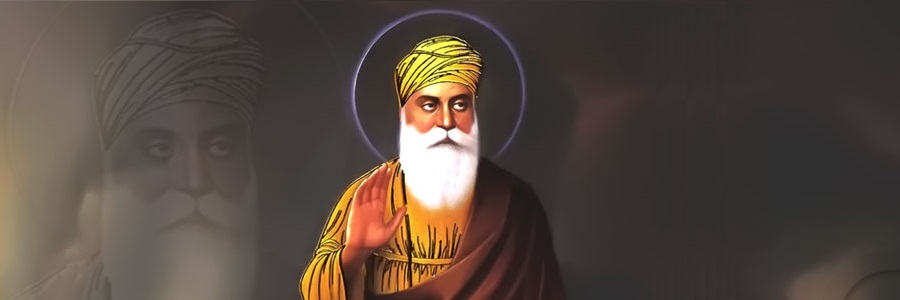 Sri Guru Nanak Sahib Ji
Sri Guru Nanak Sahib Ji is the founder of Sikhism.
In praise of the Lord, Guru Nanak said;
"There is but One God, His name is Truth,
He is the Creator, He fears none,
he is without hate, He is Timeless."
His message was for humanity to remember God,
to help others in the community via charity,
to be humble and earn a honest living. -
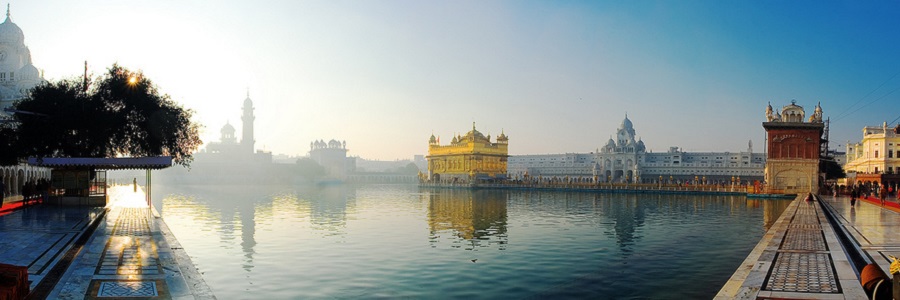 Sri Harmandir Sahib
There are four doors (which open in different
directions) which symbolise Sikhs openess
towards all people and religions.
The Gurdwara was attacked by the Indian Army
in the Sikh Genocide of 1984 (Operation Bluestar).
An official account talies 492 Sikhs deaths
including women and children. The actual
number of deaths was Tens of Thousands. -
 Nishan Sahib (Sikh Flag)
The symbol on the Nishan Sahib is called the
'Khanda'. It symbolizes God's Universal and
Creative Power. In it's center is a double edged
sword, which symbolizes the almighty power of
the creator. The 'Chakra' or the circle is a
symbol of the continuity. The two swords on
the outside are symbols of the spiritual
and political balance in the universe.
The flag is considered sacred and great
respect is shown. -
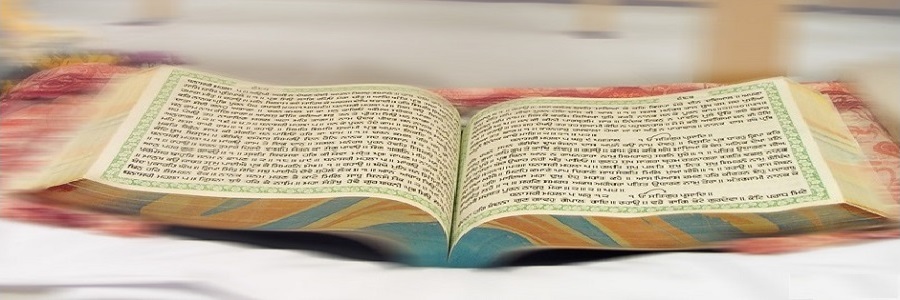 Sri Guru Granth Sahib Ji
The Sri Guru Granth Sahib contains the writings
of the ten Sikh Guru's and other holy men.
Sri Guru Gobind Singh said "All Sikhs are
commanded to obey the Granth as Guru".
The Sikhs treat the Granth as their
living Guru. -
 Ik Onkār (One God)
Ik Onkār is the first phrase in the
Mool Mantar referring to the existence
of 'one constant' taken to mean 'One God'.
Ik Onkār is the beggining of the
Mool Mantar and the first word in
the Sri Guru Granth Sahib. - Ik Onkār (One God)
Ik Onkār is the first phrase in the
Mul Mantar referring to the existence
of 'one constant' taken to mean 'One God'.
Ik Onkar is the beggining of the
Mool Mantar and the first word in
the Sri Guru Granth Sahib.
Glossary
A B C D E F G H I J K L M N O P Q R S T U V W X Y Z
A
Adharam - The opposite of Dharam (righteousness, piety, religious observance, spirituality, and morality). Refers to non-righteous actions, thoughts, or deeds; behaviour displayed by self-willed Manmukhs (ego-driven people). Gurmukhs follow the "Dharam marg" or the path of Dharam.
Adi Granth - Adi means first. Adi Granth is the first edition of the Guru Granth Sahib, compiled by Guru Arjan in 1604.
Akal Purukh - Means "Timeless One" or "The Being Beyond Time" and is used as a name for God.
Akhand Path - An uninterrupted continuous reading of the Guru Granth Sahib. Undertaken by a team of readers and typically takes approximately 48 hours.
Amrit - Nectar; sugar water used during the Khalsa initiation ceremony.
Amrit Bani - A term applied to the Sikh Scriptures, meaning the words are as sweet as nectar (amrit).
Amrit Vela - Early morning hours at dawn, considered an auspicious time for meditation and prayer as stressed by Sri Guru Nanak.
Amritdhari - A Sikh who has undergone the Khalsa initiation ceremony.
Amrit Sanskar - The rite of initiation into the Khalsa brotherhood.
Amrit Sanchar - Another term for the Khalsa initiation ceremony; synonymous with Amritsanskar.
Anand - A state of bliss that defies description. Also a composition by Guru Amar Das, found on Ang 917 of the Guru Granth Sahib.
Anand Karaj - The Sikh wedding ceremony.
Anand Karaj Sangat - Emphasizes the congregational aspect of a Sikh wedding.
Anand Sahib - Composition by Guru Amar Das found on Ang 917 of the Guru Granth Sahib. Parts are used in several Sikh ceremonies.
Anbhav Prakash - The enlightened perception of reality experienced by a person who has become a Gurmukh.
Antim Ardas - The final Sikh funeral rite.
Ardas - Main Sikh prayer.
Ardas Karna - The act of performing the Ardas prayer.
Artha - Wealth. It is acceptable to acquire wealth, but it should not become an end in itself.
Asa Di Var - A collection of hymns meant to be sung at dawn.
Atma - The soul, which is considered immortal.
Akal Takht - The highest seat of temporal authority in Sikhism, established by Guru Hargobind in 1606.
Ang - Literally “limb”; refers to a page of the Guru Granth Sahib.
B
Babur Bani - References to the invasion of India by the Mughal emperor Babur found in the Guru Granth Sahib. Metaphorically, God is said to have allowed Babur as an instrument of fate.
Barahmaha - Compositions about the twelve months. By Guru Arjan in Raga Majh, Guru Nanak in Raga Tukhari, and Guru Gobind Singh in Krishavtar.
Bandi Chor Divas - Festival celebrated by Sikhs meaning "Day of Liberation." Commemorates Guru Hargobind’s release from Gwalior with 52 princes. From Guru Amar Das onward, Sikhs annually gathered on this day. In 1577, the foundation stone of the Harmandir Sahib was laid on this day.
Bani - Abbreviation of Gurbani, referring to any writings appearing in the Guru Granth Sahib.
Benati - An appeal for assistance made to Sikhs worldwide.
Bhagat Bani - Writings in the Guru Granth Sahib by devotional saints other than the Gurus.
Bhakti - Devotion or love for God.
Bhakti Marg - The path of devotion, complementing Dharam marg.
Bhog - Ceremony marking the conclusion of a Path.
Bole So Nihal - Part of the Sikh salutation, meaning "Whoever utters [this phrase] shall be fulfilled."
Buddha Dal - "Army of veterans," formed by Nawab Kapur Singh in 1733 to oversee Sikh holy places, preach, and initiate new Khalsa converts.
C
Chandoa - The canopy placed over the Guru Granth Sahib.
Chanpada - A poetical composition of four lines in a specified meter.
Charan Pahul - Baptism ceremony involving drinking water dipped in the Guru’s or a Guru's family member’s feet.
Chaupai - A four-line stanza form used by some Gurus.
Chaur(i) - Yak hair or manmade fiber attached to a metal, placed in a wooden handle, ceremonially waved over the Guru Granth Sahib as a mark of respect.
Chaur Sahib - Another name for Chaur(i).
Chela - A disciple of the Guru; used in the Guru Granth Sahib to refer to Sikhs.
Chola - Clothing of the Gurus. Also applied to coverings of the Nishan Sahib at a Gurdwara.
Chardi Kala - Concept of eternal optimism and high spirits in Sikh philosophy.
D
Dal Khalsa - The Khalsa army established on Baisakhi day 1748, divided into 11 misls.
Dasam Granth - Book of writings of Guru Gobind Singh, compiled posthumously by Bhai Mani Singh, completed in 1734.
Dastar - A crown worn by Sikhs.
Daswandh - Giving one-tenth of one’s income to charity.
Deg Teg - The dual responsibility of the Panth to provide food and protection for the needy and oppressed.
Dhadi - One who sings the praises of God.
Dharam Yudh - War in defense of righteousness.
Dharma - Religion, teaching, or lifestyle, as in Sikh Dharma.
Diwan - Congregational worship with the Guru Granth Sahib present.
Doha - Verse form of two rhyming lines, commonly used by Guru Nanak and Kabir.
Dastar Bandi - Ceremonial tying of the turban, marking spiritual or martial achievement.
E
(No entries)
F
(No entries)
G
Gaddi - The seat or throne of Guruship.
Gatka - (Gurmukhi: ਗਤਕਾ) Weapon-based Indian martial art from the Punjab region. Named after wooden sticks used to simulate swords in sparring.
Gatka Akhara - Training school for the martial art Gatka.
Giani - A person of spiritual knowledge.
Granthi - One who performs readings of the Guru Granth Sahib at religious occasions; may be male or female.
Gristhi - Sikh ideal of married life: having a family, earning honestly, serving humanity, and worshipping God.
Gurbani - Writings of the Gurus.
Gurdwara - Sikh religous building; literally "Gateway to the Guru."
Gurmat - Teachings and philosophy of the Sikh Gurus, including the Rehat Maryada (code of conduct).
Gurmata - Resolution passed in a council under Guru guidance or advice.
Gurmukh - One who is God-oriented and God-filled, in contrast to a self-centered Manmukh.
Gurmukhi - Written form of Punjabi used in Sikh scriptures, propagated by Guru Nanak and Guru Angad.
Gursikh - One sincerely devoted to the service of the Guru.
Gurpurb - Celebration of a Guru's birth or death anniversary; also used for anniversaries of the Guru Granth Sahib installation (1604) or Guru Gobind Singh’s sons’ deaths.
Gutka - Book containing daily Sikh prayers.
Guru Ka Langar - Community kitchen at the Gurdwara emphasizing service and equality.
Gurmantar - Meditation on God’s name, closely related to Naam Simran.
H
Hankar - Pride; one of the weaknesses.
Hazare Sabad - Common name for 7 Shabads from the Guru Granth Sahib and 10 from the Dasam Granth.
Haumai - Pride and self-centeredness.
Hazur Sahib - One of the five Takhts.
Hola Mohalla - Annual spring gathering at Anandpur Sahib for sports, music, and poetry contests, initiated by Guru Gobind Singh in 1680.
Hukam - The ordered will of God.
Hukamnama - Instructions issued by the Gurus or other Sikh authorities.
I
Ik Onkar - Found at the beginning of the Mool Mantar; means "One God."
Insaaf - Justice, often emphasized in Sikh ethical teachings.
J
Jalous - Outdoor procession led by the Guru Granth Sahib and five Khalsa Sikhs.
Janam Sakhi - A bibliographic account of the life of Guru Nanak, or other Gurus.
Jap - Devout repetition of the divine name of God, or a scripture.
Jaap Sahib - Morning prayer of the Sikhs, composed by Guru Gobind Singh.
Japji Sahib - Universal song about God by Guru Nanak; consists of the Mool Mantra, 38 hymns, and a final Salok. Appears at the very beginning of the Guru Granth Sahib and is recited daily.
Japu Sahib - The same as Jaap Sahib.
Jathedar - The appointed head of one of the five Sikh Takhts.
Jivan Mukti - The Sikh belief that spiritual liberation may be achieved during one’s lifetime, not only after death.
K
Kachha - Drawers or briefs; one of the five physical symbols of the Khalsa, symbolizing self-control.
Kalyug - Age in which righteousness and godliness are forgotten.
Kam - Lust; one of the human weaknesses.
Kanga - Comb; one of the five Khalsa symbols, representing hygiene and discipline.
Kara - Steel bracelet; one of the five Khalsa symbols, representing restraint and remembrance of God.
Karah Parshad - Sweet dish served at religious ceremonies in the presence of the Guru Granth Sahib, symbolizing equality.
Karma - The reward or punishment of any action by God, according to merit.
Kaur - Mandatory last name for Khalsa Sikh females; means "princess."
Kar Seva - Voluntary work for religious purposes, including building or maintaining gurdwaras.
Karta Purukh - A name of God, the Creator of all.
Katha - Religious lecture on Sikhism.
Kesh - Uncut hair; one of the five Khalsa symbols, representing spirituality.
Kesdhari - Sikh who does not cut hair; may or may not be Amritdhari.
Keski - Head covering worn under the turban by some Sikhs, especially boys before they start wearing a full turban.
Khalsa Sajna Diwas - Celebrated annually on 30th March to mark the founding of the Khalsa by Guru Gobind Singh in 1699.
Kirpan - Sword; one of the five Khalsa symbols, representing the fight against injustice.
Kirtan - Musical rendering of Sikh Gurbani.
Kirtan Sohila - Collection of five hymns recited at bedtime as part of Nitnem and funeral rites.
Krodh - Anger; one of the human weaknesses.
Kurehats (Ku-rehats) - Vows of abstinence taken on becoming a Khalsa: uncut hair, no halal meat, no adultery, no intoxicants.
L
Langar - Free community kitchen in all Gurdwaras, symbolizing equality; instituted by Guru Nanak.
Laavan - Circumambulation around the Guru Granth Sahib during the Sikh marriage ceremony; also refers to the four-stanza composition by Guru Ram Das.
Lobh - Greed; one of the human weaknesses.
M
Maghi - Sikh festival held annually on January 14 to commemorate the martyrs of Muktsar.
Mehala - Used in the Guru Granth Sahib to indicate the author of a composition; e.g., Mehala 5 is Guru Arjan.
Mahant - Corrupt officials who previously controlled gurdwaras before SGPC reforms.
Manji - Stool or string bed on which the Guru Granth Sahib is placed, symbolizing sovereignty.
Mala - Wool cord with knots used for prayer or meditation.
Manmukh - Self-centered person who has forgotten God; opposite of a Gurmukh.
Matha Tekna - Bowing to touch the forehead to the floor before the Guru Granth Sahib as a sign of respect.
Maya - Illusion of material attachment to the world.
Mela - Any Sikh religious festival outside Guru birth or death anniversaries.
Miri Piri - Concept of balancing spiritual and temporal life; represented by two swords.
Misl - Fighting unit of the Sikh armies in the 18th century.
Mool Mantar - Opening verse of Japji Sahib; cornerstone of Sikhism.
Mukti - Spiritual liberation from the cycle of birth and death.
Mundavani - Concluding poem by Guru Arjan in the Guru Granth Sahib; means "seal."
N
Nagara - Kettledrum used in gurdwaras; symbol of royal authority and used to signal Langar readiness.
Naam - Name of God; central to Sikh meditation.
Naam Japna, Kirt Karna, Vand Chakna - Meditation on God’s name, honest work, and giving to charity; three fundamental Sikh practices.
Naam Simran - Remembrance of God through meditation.
Nanak Panthi - Follower of Guru Nanak.
Nihang - Sikh order following Guru Gobind Singh’s soldier lifestyle, wearing blue robes.
Nirankar - Name of God meaning "formless."
Nirbhau - Fearless.
Nirguna - Attribute of God as beyond form and human comprehension.
Nirvair - Without hate.
Nitnem - Daily Sikh prayers, including Japji Sahib, Rehras Sahib, and Kirtan Sohila.
O
Onkar - God as the primal being; also a composition of Guru Nanak (Ang 929).
P
Pada - Division of a hymn in the Guru Granth Sahib, 1–4 verses in length.
Palki - Wooden, golden, or marble palanquin in which the Guru Granth Sahib is ceremonially placed.
Panj Kakke - The five Khalsa symbols: kachha, kangha, kara, kes, kirpan.
Panj Piaras - The five beloved ones first initiated into the Khalsa order; five Khalsa are required for initiation of a new member.
Panth - Entire Sikh community.
Parkarma - Walkway around the sarovar (pool) in many gurdwaras.
Patit - Khalsa Sikh who fails to uphold Khalsa vows.
Prakash Karna - Early morning ceremony when the Guru Granth Sahib is formally opened.
Path - Reading of the Guru Granth Sahib.
Paudi/Pauri - Stanza or verses of variable length and metre in the Guru Granth Sahib.
Phera - Circling the Guru Granth Sahib during marriage.
Pothi - Book or volume of religious hymns.
Q
(No entries)
R
Raag - Musical mode or tune based on five or more notes.
Raag Mala - Last composition in the Guru Granth Sahib, listing 84 ragas.
Raagi - Musician who sings hymns of the Guru Granth Sahib.
Rehras - Collection of nine hymns recited at sunset as part of Nitnem.
Raj Karega Khalsa - Sikh battle cry; "The Khalsa shall rule."
Rehat Maryada - Sikh Code of Conduct by SGPC.
Rehat Nama - Manual of conduct for Khalsa Sikhs.
Rumala - Ceremonial cloth to cover the Guru Granth Sahib.
S
Sach Khand - Realm of truth; final stage of spiritual ascent.
Sadh Sangat - Sikh congregation.
Sahibzadas - Four sons of Guru Gobind Singh martyred for the faith.
Sahib - Term of respect for the Guru Granth Sahib and historical gurdwaras.
Sakhi - Story about a Guru.
Sangat - Holy congregation.
Sangrand - First day of the month; reading of Barahmaha hymns for the month.
Sant - Holy person or saint.
Sarbat Khalsa - Representative meeting of Sikhs for Panth matters.
Saropa - Honorary gift of cloth, often for turbans or scarves.
Sarovar - Bathing pool at gurdwaras.
Sat Guru - Supreme Guru, God.
Sat Sri Akal - Sikh greeting: "Immortal God is Truth."
Satyug - Era where truth prevails; opposite of Kalyug.
Sehaj - Spiritual peace from union with God.
Sehaj Path - Non-continuous reading of the Guru Granth Sahib.
Seva - Selfless service, cornerstone of Sikhism.
Seva Panthi - Sikh devoted to community service.
Shabad - Religious hymn in Sikh scriptures.
Shaheed - Title for Sikh martyrs.
Slok - Couplets in the Guru Granth Sahib.
Shromani Gurdwara Parbandhak Committee (SGPC) - Oversees administration of gurdwaras, education, and publications.
Sikhi - Sikh teachings.
Singh - Lion; compulsory last name for male Khalsa Sikhs.
Sodar - Composition of Guru Nanak read at sunset as part of Rehras.
Sukh Asan - Ceremony when Guru Granth Sahib is formally closed at night.
Sukhmani Sahib - Major composition by Guru Arjan (Ang 262).
Swayya - Hymns composed by Guru Gobind Singh in the Dasam Granth.
T
Takht - Seat of Sikh authority; five designated gurdwaras.
Thambh Sahib - Pole or tower associated with a Guru.
Tankhaiya - Person who commits a religious offence requiring punishment.
U
(No entries)
V
Vaisakhi - Celebration on April 13–14; Guru Gobind Singh founded the Khalsa in 1699; Guru Amar Das started annual Sikh gatherings in 1567. From a Sikh perspective the correct term is Khalsa Sajna Diwas.
W
Waheguru - "Wonderful Lord"; Gurmantar for meditation.
X
(No entries)
Y
(No entries)
Z
Zafarnama - Letter of Victory written by Guru Gobind Singh.