


-

- DISCOVER SIKHISM
- SIKH GURUS
- Sikh Gurus
- Sri Guru Nanak Sahib Ji
- Sri Guru Angad Sahib Ji
- Sri Guru Amar Das Sahib Ji
- Sri Guru Ram Das Sahib Ji
- Sri Guru Arjan Sahib Ji
- Sri Guru Hargobind Sahib Ji
- Sri Guru Har Rai Sahib Ji
- Sri Guru Harkrishan Sahib Ji
- Sri Guru Tegh Bahadur Sahib Ji
- Sri Guru Gobind Singh Sahib Ji
- Sri Guru Granth Sahib Ji
- GURDWARAS
- SIKH LIBRARY
- DAILY HUKAMNAMA
- MORE
- KIRTAN
- LIVE TV
- ABOUT US

The Tree That Spoke
A humble encounter with nature reveals a powerful lesson about greed, respect, and the unseen wisdom of the natural world.
The Mysterious Tree: A Voice in the Forest
In a quiet village on the edge of a dense forest, there lived a poor woodcutter who earned his living by cutting and selling firewood. Each day, he ventured into the forest, careful to take only what he needed.
One morning, as the mist still clung to the earth, he wandered deeper than usual. There, he came upon a magnificent tree—tall, ancient, and unlike any he had seen before. Its leaves shimmered in the sunlight, and its trunk was wide and strong.
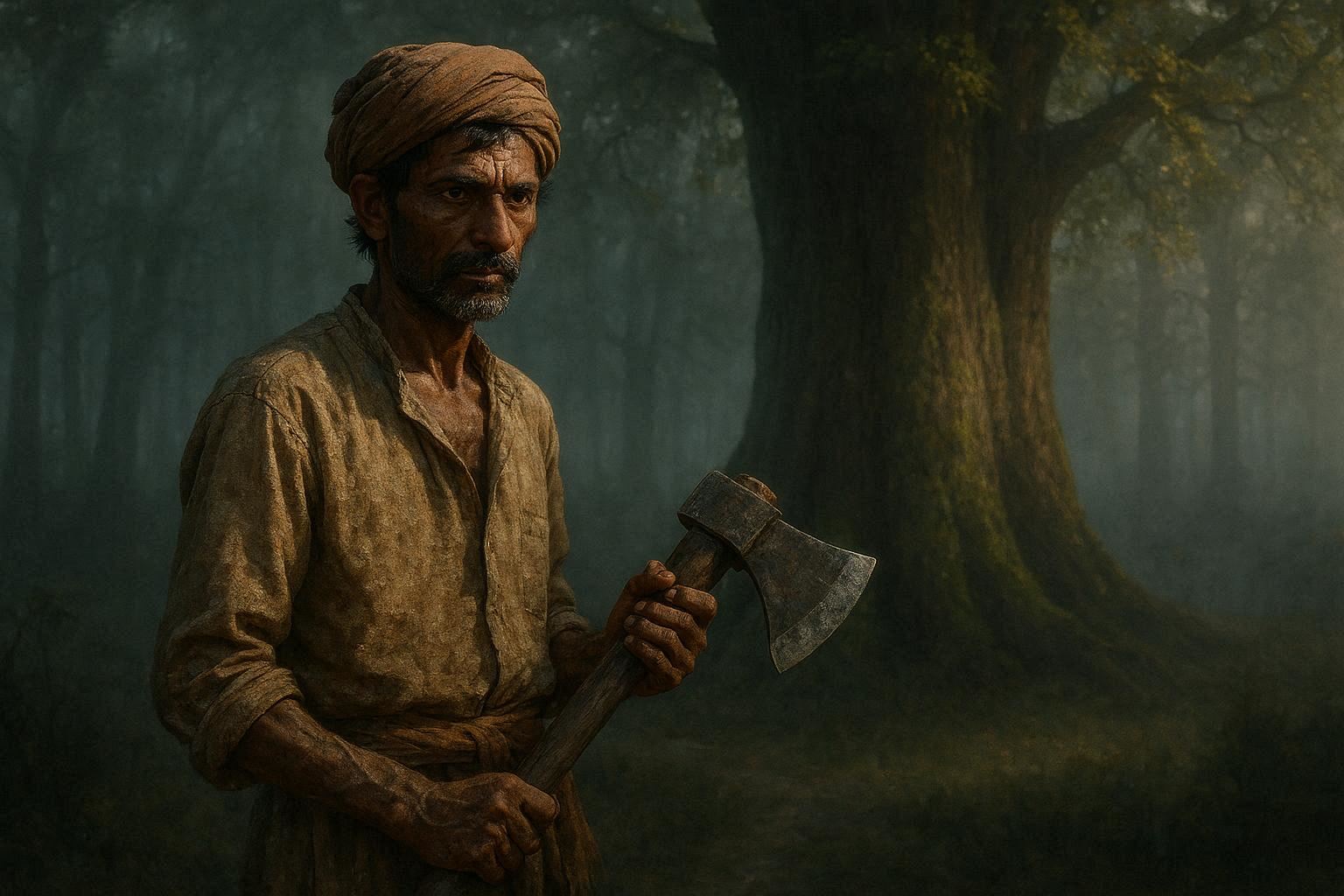
The woodcutter encounters the mysterious talking tree.
As he raised his axe to strike, a voice suddenly echoed through the stillness.
"Stop," it said gently. "Do not harm me."
The woodcutter froze, his heart pounding. He looked around, but there was no one in sight.
"Who speaks?" he asked, trembling.
"It is I—the tree," the voice replied. "Spare me, and I will reward you."
The First Choice: Kindness Over Greed
The woodcutter lowered his axe. Though frightened, he felt no malice in the voice. Instead of striking, he stepped back.
"I will not harm you," he said. "It is enough for me to gather fallen branches."
The tree rustled softly, as if in gratitude. "For your kindness, return tomorrow. I will give you something of value."
The next day, the woodcutter returned. At the base of the tree, he found a small pouch filled with gold coins. Surprised and thankful, he took only what he needed and went home.
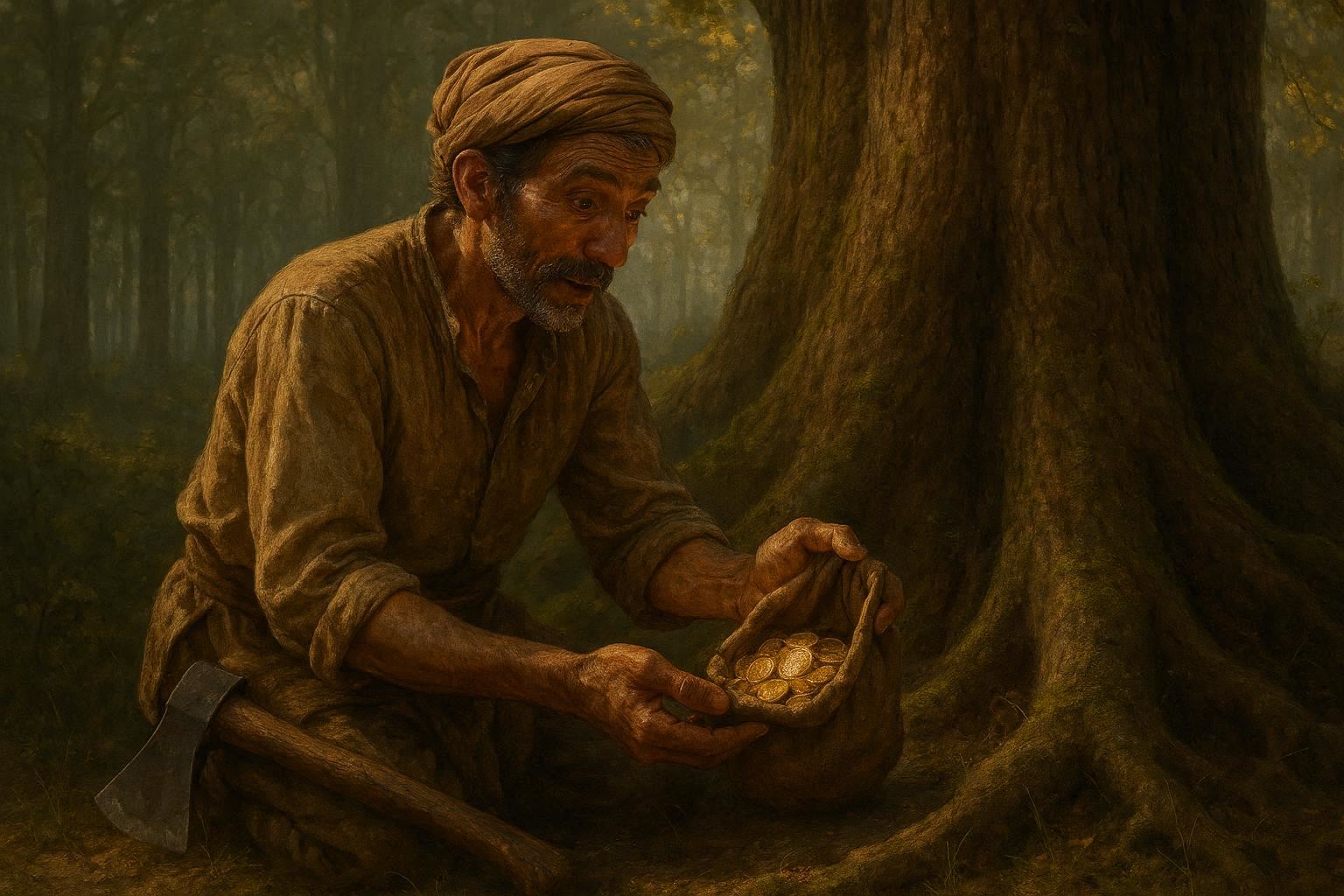
The woodcutter discovered a small pouch filled with gold coins among the roots.
The Growing Temptation: When Enough Is Not Enough
For many days, the woodcutter returned, each time receiving a modest reward. His life improved—he had food, shelter, and peace.
But soon, a new thought crept into his mind.
If the tree can give so much… what more might it hold?
Greed slowly replaced gratitude.
One day, he brought his axe again—not for survival, but for wealth. Ignoring the voice he had once respected, he raised the blade high.
The Consequence: Nature's Silent Justice
As the axe struck the trunk, the forest fell unnaturally silent. The wind stopped. The birds ceased their song.
The tree spoke once more—but this time, its voice carried sorrow.
"You were given enough, yet you chose greed."
Suddenly, the ground beneath the woodcutter trembled. The pouch of gold he carried turned to dust, slipping through his fingers. In moments, everything was gone.
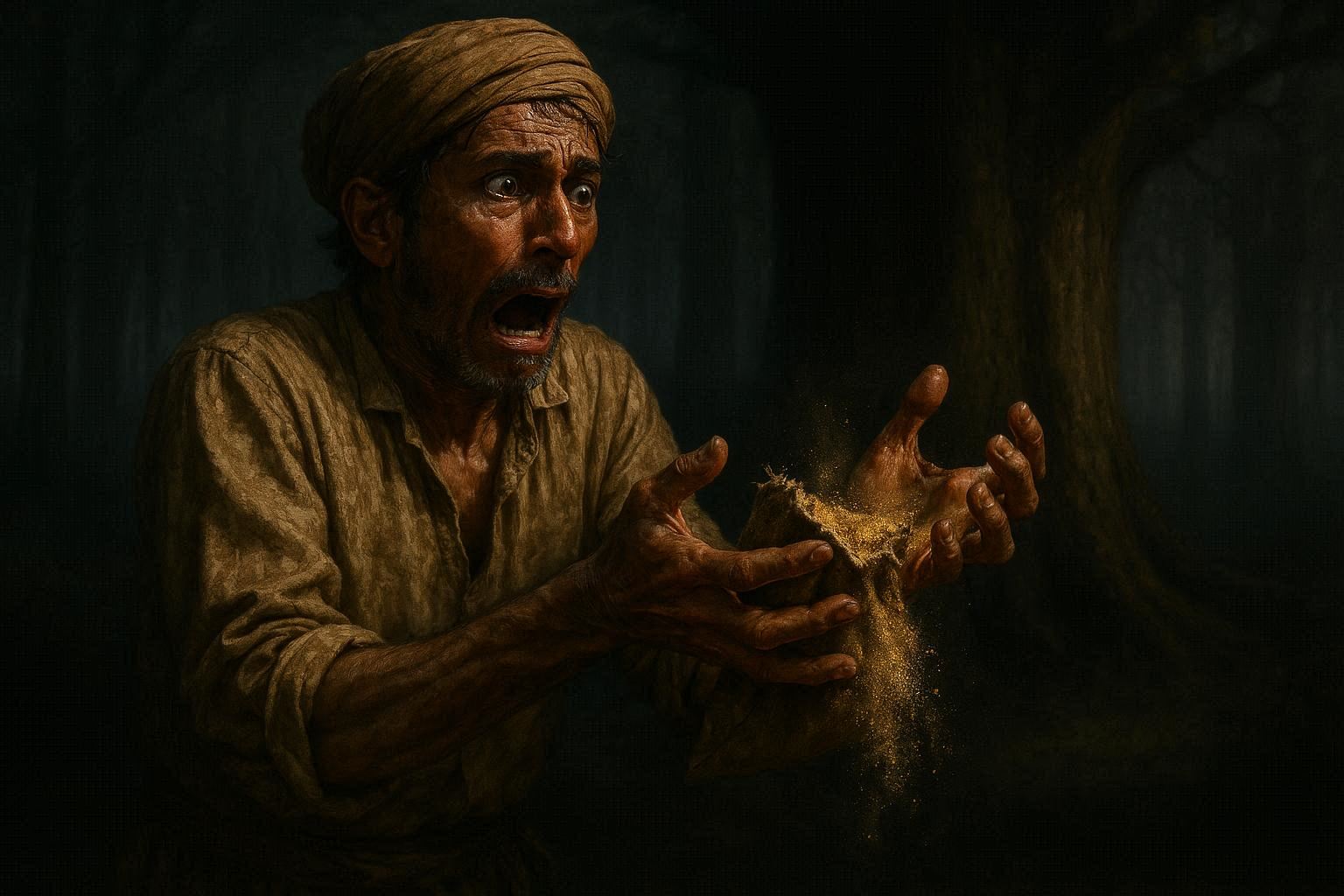
In moments, everything was gone.
Slowly, a strange numbness crept up his arms. His feet sank into the soil as though the ground itself had claimed him. Panic filled his chest.
"What is happening to me?" he cried.
"You wished to take from the forest without giving," the tree replied. "Now, you shall remain… and give back."
Before he could scream, his body stiffened. His skin hardened like bark. His arms stretched upward, fingers splitting into branches.
In moments, where the woodcutter once stood… there was another tree.
Silent. Rooted. Watching.
The Realization: Wisdom Through Loss
Though he could no longer move, the woodcutter was not without awareness.
He felt the wind pass through his leaves. He felt birds rest upon his branches. He felt the slow passage of time in ways he had never understood before.
And for the first time in his life… he gave without taking.
Travelers came and rested in his shade. Birds built nests in his arms. Children played beneath him.
Seasons passed, and with them, understanding grew.
To take endlessly is to lose yourself. To give is to truly live.
And sometimes, when the forest is quiet, it is said that a faint whisper can still be heard among the leaves—
a voice not of the old tree… but of the man who learned too late.
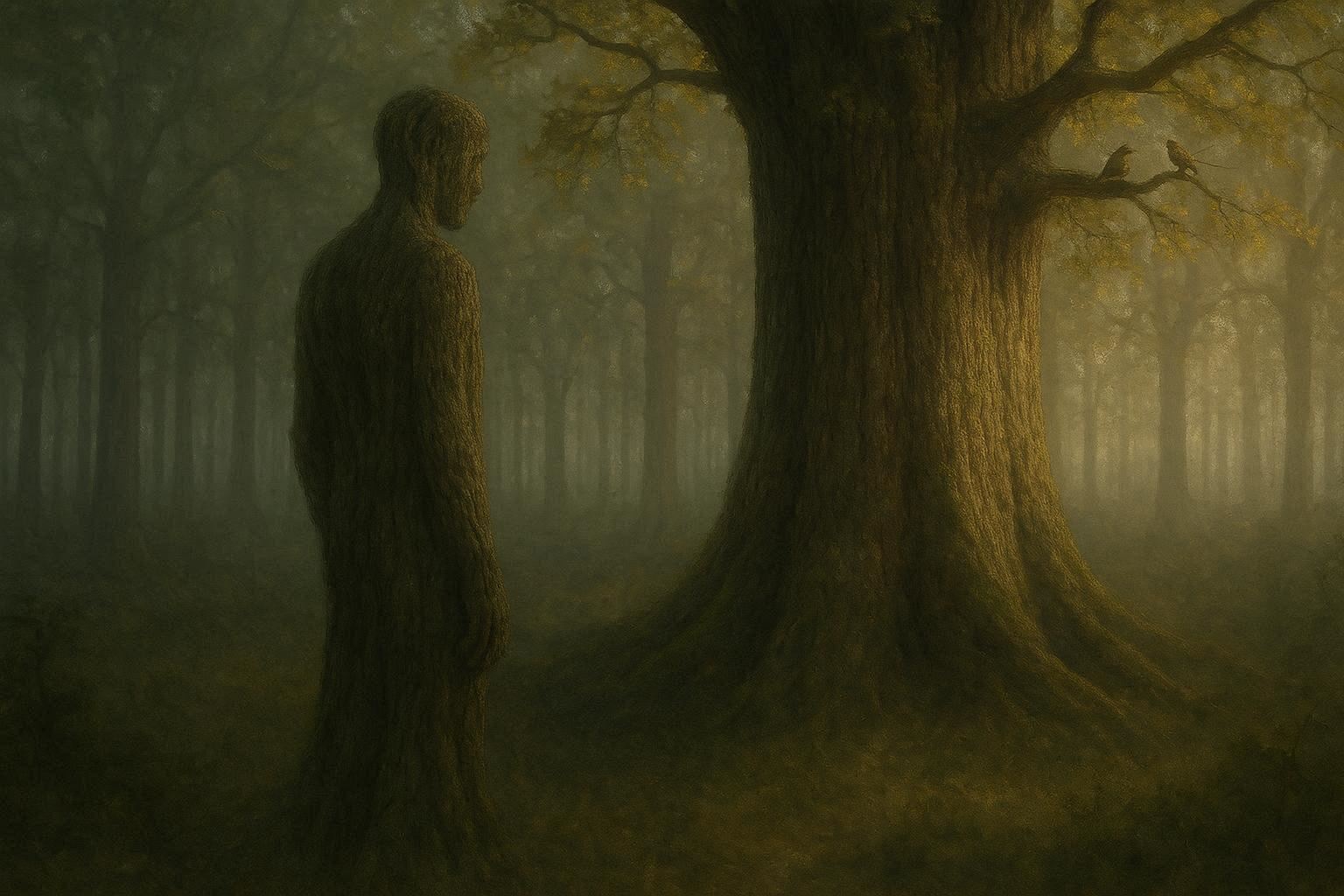
The man learned too late.
The Deeper Meaning: Respecting Nature's Balance
This story reflects important truths about life and the natural world:
The Tree That Spoke: Represents nature—wise, generous, and deserving of respect.
The Woodcutter: Represents human desire, capable of both gratitude and greed.
The Gifts: Symbolize nature's abundance when approached with balance and humility.
The Greed: Represents overconsumption and disregard for limits.
The Lesson: When we take more than we need, we risk destroying the very source of our well-being.
The Bitter Truth: When Balance Is Broken
The woodcutter's mistake was not in accepting the gift—but in forgetting the respect that earned it.
Nature gives, but it also expects harmony. Once that balance is broken, the consequences are inevitable.
Teaching from the Guru Granth Sahib
This tale reflects a deeper awareness of responsibility, gratitude, and the dangers of greed:
ਕਰਣੋ ਹੁਤੋ ਸੁ ਨਾ ਕੀਓ ਪਰਿਓ ਲੋਭ ਕੈ ਫੰਧ ॥
Karṇo huṫo so naa kee▫o pari▫o lobʰ kæ fanḋʰ ||
You have not done what you should have done; you are entangled in the web of greed.
ਨਾਨਕ ਸਮਿਓ ਰਮਿ ਗਇਓ ਅਬ ਕਿਉ ਰੋਵਤ ਅੰਧ ॥੩੬॥
Naanak sami▫o ram ga▫i▫o ab ki▫o rovaṫ anḋʰ ||36||
Nanak, your time is past and gone; why are you crying now, you blind fool? ||36||
~ Sri Guru Granth Sahib Ji, Guru Tegh Bahadur, Ang 1428
Just as the woodcutter ignored limits and became entangled in desire, we too may become blinded by greed, forgetting the source of what sustains us. Awareness, humility, and timely action keep us aligned with balance.
Core Message
Nature is generous—but not limitless.
Respect, gratitude, and restraint are essential to preserving what sustains us.
Greed blinds us to what is enough—and in that blindness, we risk losing everything.
Reflective Closing
This story invites us to reflect: Are we taking only what we need—or more than we should?
Do we act with gratitude toward the world around us—or with entitlement?
True harmony lies in balance—between need and desire, taking and giving.
Let us honor nature, not exploit it—so its gifts may endure for generations to come.
Key Takeaways:
◾ Nature must be respected, not exploited.
◾ Greed leads to loss, even when abundance is present.
◾ Gratitude preserves what we are given.
◾ Balance is essential for lasting well-being.
Reflection Question:
Where in your life might you be taking more than you truly need?
 Back to Punjabi Folk Tales List