


-

- DISCOVER SIKHISM
- SIKH GURUS
- Sikh Gurus
- Sri Guru Nanak Sahib Ji
- Sri Guru Angad Sahib Ji
- Sri Guru Amar Das Sahib Ji
- Sri Guru Ram Das Sahib Ji
- Sri Guru Arjan Sahib Ji
- Sri Guru Hargobind Sahib Ji
- Sri Guru Har Rai Sahib Ji
- Sri Guru Harkrishan Sahib Ji
- Sri Guru Tegh Bahadur Sahib Ji
- Sri Guru Gobind Singh Sahib Ji
- Sri Guru Granth Sahib Ji
- GURDWARAS
- SIKH LIBRARY
- DAILY HUKAMNAMA
- MORE
- KIRTAN
- LIVE TV
- ABOUT US

The Fakir and the Prideful Couple
A prideful act leads to tragedy, while a fakir's humility reveals the quiet power of faith and divine justice.
The Woman on the Roof
One afternoon, a wealthy woman strolled along the sun-warmed tiles of her rooftop, her mind adrift in thoughts of her riches and power. She held her chin high, imagining the respect—and even fear—she commanded below. Pride had clouded her heart, and her ego made her blind to the struggles and humanity of those around her. The wind teased her silk sari, but she barely noticed, lost in her sense of superiority.
Lost in her arrogance, she chewed her betel leaf (paan) without a thought for anyone below. Without hesitation, she spat it off the roof, the red stain streaking the air as it fell toward the street. She did not care who it might hit, her mind fixed only on herself and her imagined power.

A wealthy woman standing confidently on her rooftop, overlooking the bustling city below.
The Fakir
Below, a poor fakir (holy beggar) walked slowly along the dusty street, his eyes lowered in quiet meditation. Suddenly, the paan struck his head, startling him. He looked up, tears welling in his eyes, and saw the wealthy woman above. Yet, he did not speak or retaliate. Instead, he stood there in silent patience, feeling only a gentle wonder at what had fallen upon him.
Even his calm and humble response angered the woman further, for she could not understand that his strength lay not in force, but in faith and humility.

The paan struck the fakir's head.
The Husband's Wrath
The woman ran to her husband, her voice sharp with anger:
"Look at that beggar! What strength does he have to look up at us like that?"
Fueled by pride and rage, the husband grabbed a heavy stick and stormed downstairs, his face twisted with fury. He struck the fakir hard on the head.
The fakir did not cry out or resist. Calmly, he placed his hand where the stick had landed and saw it covered in blood. Yet his heart remained peaceful, untouched by anger or revenge.

Fueled by pride and rage, the husband attacked the fakir.
Enraged at the fakir's silence, the husband rushed back toward the roof, intending to strike again. But fate intervened. His foot slipped on the top step, and he fell violently, his head splitting open, killing him instantly.
The Woman's Realization
The woman rushed downstairs, her heart pounding. Before her lay her husband, lifeless, and nearby sat the same fakir, calm and serene. Shock and grief washed over her, and for the first time, her arrogance vanished.
Tears streaming down her face, she approached him:
"Baba, please forgive me."
The fakir looked at her gently and asked:
"Daughter, who are you?"
She confessed, her voice trembling:
"I am the one who spat on your head. The man who struck you was my husband."
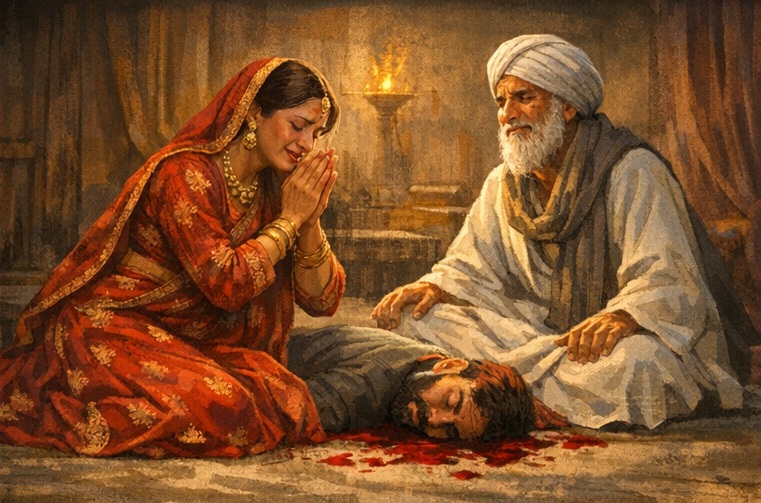
Grief and regret filled her as she witnessed her husband's lifeless body, and for the first time, her arrogance dissolved.
The fakir smiled softly and said:
"Daughter, I will tell you the truth. Neither you are at fault, nor am I."
Curious, she asked what had happened. The fakir explained:
"This was a matter between our Masters. Your master had the power to strike and break a head, but my Master had the power to lift someone off the earth itself. You placed your faith in your master, and I placed my faith in mine."
He recited the words that revealed the higher justice at work:
"Your master surely supported you. My Master surely protected me. Your master struck the blow. My Master settled the account."
In that moment, the woman understood that worldly pride leads to tragedy, while faith and humility protect. She realized that true strength lies not in wealth, power, or anger, but in trust in God.
Moral of the Story
1. Pride leads to destruction
The husband's ego and anger brought about his death.
2. Humility protects a person
The fakir remained silent, patient, and humble despite being struck.
3. Divine justice settles all accounts
Divine justice works in its own time, beyond human understanding.
4. Wealth and power create false intoxication
Money, status, and authority can make people forget compassion and humanity.
5. True strength comes from faith in God
The fakir's strength was spiritual, not physical — it came from trust in the Divine.
Connection to the Guru Granth Sahib
This story reflects the teachings of the Guru Granth Sahib, which emphasize humility, faith, and detachment from worldly attachments and pride.
This teaching from the Guru Granth Sahib reminds us that worldly possessions and status are temporary and without lasting value.
ਰਾਜੁ ਮਾਲੁ ਜੋਬਨੁ ਸਭੁ ਛਾਂਵ ॥
Raaj Maal Joban Sabʰ Chʰaaⁿv ||
Power, wealth, and youth are all just shadows.
~ Sri Guru Granth Sahib Ji, Guru Nanak, Malaar, Ang 1257
Trust in the Guru safeguards a person, regardless of worldly circumstances.
ਅਪਨੇ ਸੇਵਕ ਕੀ ਆਪੇ ਰਾਖੈ ਪ੍ਰਭ ਮੇਰੇ ਕੋ ਵਡ ਪਰਤਾਪੁ ॥੧॥
Apné Sévak Kee Aapé Raakʰæ Parabʰ Méré Ko Vad Parṫaap. ||1||
God itself saves its servant. Great is the glorious grandeur of my God! ||1||
~ Sri Guru Granth Sahib Ji, Guru Arjan, Bilaaval, Ang 825
The full passage from Bilaaval Mehlā 5 teaches that:
◾ Surrender to the Guru (service to the Guru) brings true protection.
◾ The Divine (through Guru's Sabad and grace) saves and shields the Sikh from suffering and sin.
◾ Faith, humility, and meditation on the Naam bring inner peace and spiritual cooling.

Shock and grief washed over her, and for the first time, her arrogance vanished.
The Sikh scripture repeatedly emphasizes humility (nimrata) as the antidote to ego, arrogance, and attachments to worldly success:
ਝੂਠੈ ਮਾਨੁ ਕਹਾ ਕਰੈ ਜਗੁ ਸੁਪਨੇ ਜਿਉ ਜਾਨੁ ॥
Jʰootʰæ Maan Kahaa Karæ Jag Supné Ji▫o Jaan. ||
Why do you take such false pride in yourself? You must know that the world is just a dream.
ਇਨ ਮੈ ਕਛੁ ਤੇਰੋ ਨਹੀ ਨਾਨਕ ਕਹਿਓ ਬਖਾਨਿ ॥੪੧॥
In Mæ Kachʰ Téro Nahee Naanak Kahi▫o Bakʰaan. ||41||
In it, nothing truly belongs to you; O Nanak, this is the truth. ||41||
~ Sri Guru Granth Sahib Ji, Guru Tegh Bahadur, Salok Mahala 9, Ang 1428
The lesson is clear: worldly possessions and status are temporary, and true security comes from faith, humility, and reliance on the Divine.
Core Message
Do not take pride in worldly status. Live with humility, place your faith in the Guru, and remember that the world is temporary like a dream.
For in the end, pride fades, power passes, and only humility and faith remain.

The woman stands in contemplation, gazing at the distant horizon. The tranquil landscape symbolizes the impermanence of worldly things and the lasting peace that comes from faith and humility. The river, flowing gently, reflects the flow of life and the transient nature of material wealth.
Reflective Closing 🌿
Next time you're faced with a situation where pride or anger might take control, remember the story of the fakir and the prideful couple. True strength lies in humility, and peace comes from placing trust in the Divine, not in worldly power. As you move through life, reflect on the impermanence of material wealth and the lasting power of faith. Choose to live with humility, for that is the true path to peace and protection, both in this world and beyond.
 Back to Punjabi Folk Tales List